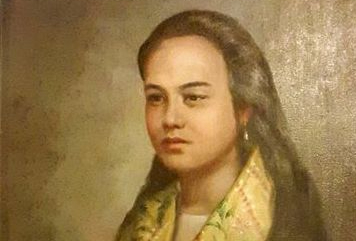
In Lipa, Batangas, there is an attractive bahay na bato (a traditional Philippine ancestral home) that honors the memory of Segunda Solis Katigbak (1863-1943). She was the grand matriarch of the Katigbak clan and is recognized as the first love of Philippine national hero José Rizal, serving as the inspiration for his early poetry.

BLOOMING ROMANCE
The love-smitten adolescent Rizal greatly detailed his blossoming young romance with the 14-year-old Segunda Solis Katigbak, whom he addressed as “la Señorita K.” in Chapter 6 of his Memorias de un Estudiante de Manila (Memoirs of a Student in Manila).
During one of Rizal’s visits to his maternal grandaunt, Doña Basilia Bauzon de Leyba (affectionately known as Impo Ilyang and a friend of the Katigbak family), who lived in Trozo, Manila, he met Segunda. She was the sister of Mariano Katigbak, Rizal’s classmate at Ateneo Municipal and a trusted friend, who accompanied him on that visit.
The charming and graceful Segunda captivated the young José. Rizal vividly described her as: “Una bajita, de unos ojos expresivos y ardientes a veces y lánguidos otros, rosada, una sonrisa tan encantadora y provocativa que dejaba ver unos dientes muy hermosos; un aire de sílfide, un no sé qué de halagador desparramábase por todo su ser.” (Short, with expressive eyes—ardent at times, drooping at others—rosy, with a bewitching and provocative smile that revealed very beautiful teeth; she had the air of a sylph, and an indescribable allure radiated from her whole being.) “No era más bella mujer que ví pero no he visto más encantadora y halagüeña.” (She was not the most beautiful woman I had seen, but I had never seen one more enchanting and alluring.)
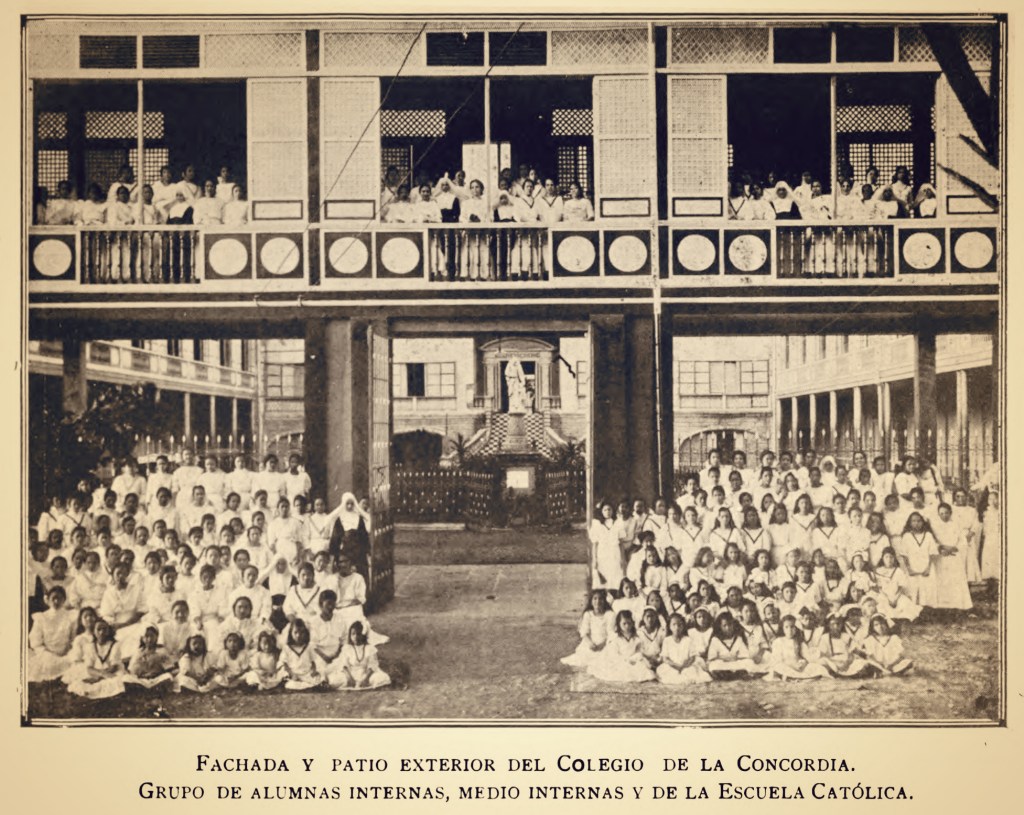
Photo from the book: Los Padres Paules y Las Hijas de La Caridad En Filipinas: Breve Reseña Histórica De la Labor Realizada en Estas Islas por La Doble Familia De San Vicente De Paul, 1862-1912, (Harvard University Archives Collection)
At that time, Segunda and Rizal’s sister Olimpia were both students at La Concordia and eventually became friends. José, still a teenager, frequently visited the school under the pretense of seeing his sister, though in truth, it was Señorita K whom he longed to see. During these visits, Segunda and José would engage in heartfelt conversations, revealing a mutual affection that needed no words. Rizal later wrote: “En verdad que durante nuestra conversación, nuestros ojos encontraban y miradas intensísimas llena de una expresión amantemente melancholia venían de encadenar mi alma para siempre.” (During our conversation, our eyes met, and the most intense glances—full of a loving melancholy—chained my soul forever.) “Iba yo poco a poco bebiendo la dulcísima ponzoña del amor a medida que proseguía la conversación. Sus miradas eran terribles por lo dulces y expresivas; su voz era tan armoniosa y un encanto acompañaba siempre a todas sus acciones. De cuando en cuando un lánguido rayo penetraba en mi corazón y sentía un no se qué hasta entonces desconocido para mí.” (Little by little, I was drinking in the sweetest poison of love as the conversation went on. Her glances were terribly sweet and expressive; her voice so harmonious, and a certain charm graced her every movement. From time to time, a languid ray would pierce my heart, and I would feel something I had never known before.)…“Y a decir verdad nos amábamos sin que nos hayamos declarado claramente sino solamente nos comprendíamos en nuestras miradas.” (And truth be told, we loved each other without ever openly declaring it—we simply understood each other through our eyes.)
THE FORMIDABLE LUZ-KATIGBAK UNION
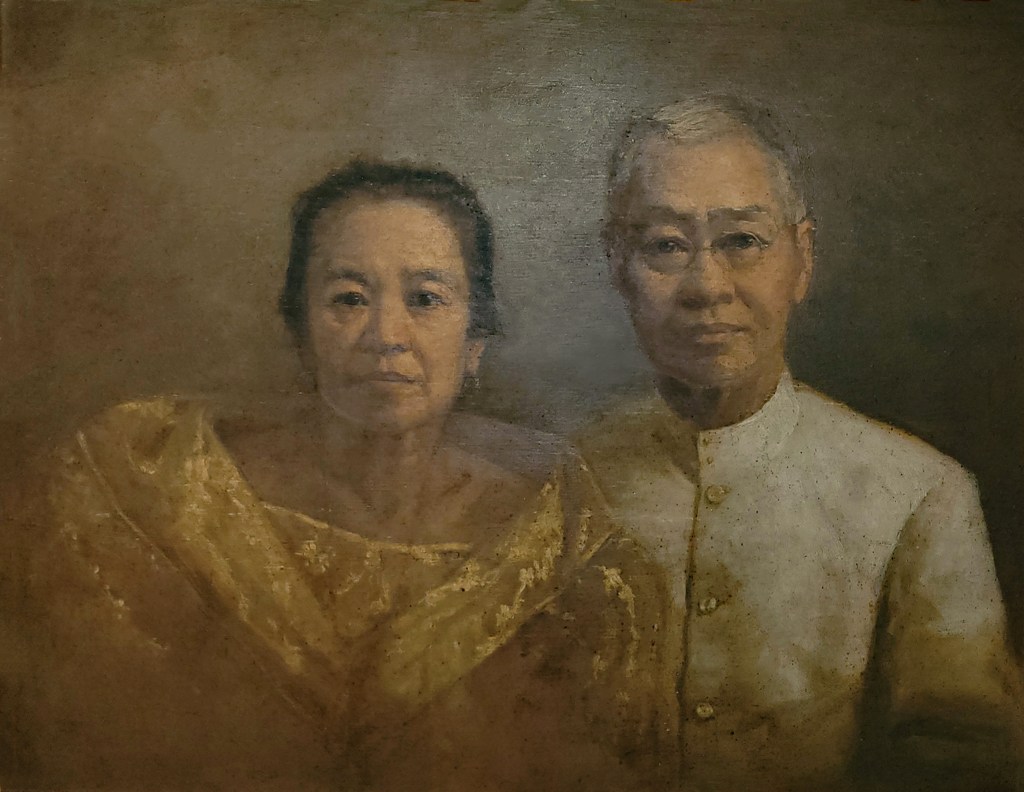
by National Artist Fernando Amorsolo
(Herlihy-Luz Family Collection)
My grandparents, my Lola Unday (Segunda Katigbak) and Lolo Uwel (Manuel Luz) were two bodies of water matched together so that the wealth of the Katigbak and Luz families would not be dispersed. They lived in a 3-story house, but Lolo Uwel’s habit of cutting his pants, his cane, and ultimately the third floor of their house, still shows today at the Casa de Segunda, a bahay na bato. My grandmother was said to have ridden a horse-drawn carriage and descended with gem-studded shoes. Under her bed were gold and silver coins that were used to spend for her voracious appetite. It was known that she had breakfast, segundo almuerzo, lunch, and merienda cena, and media noche snack. They must have been a formidable couple!”
ENCARNITA LUZ y CABAL
daughter of Fernando Katigbak Luz
Manuel Luz y Mitra (1858-1942), Segunda’s fiancé, was the son of Don José Luz é Inciong (gobernadorcillo of Lipa 1844, 1854), brother of Segunda’s maternal grandmother, Doña Patricia Luz de Solis. He was more acceptable to the Katigbak family since it was tradition for maidens to marry men within the same social circle in the locality. Consanguineous marriages were also prevalent in the Lipeño society then. Don Manuel served as a cabeza de barangay and a teniente mayor (a vice mayor in today’s parlance) of Lipa during the Spanish era. Aside from the coffee and agricultural trade, Manuel Luz was engaged in the tobacco and cigar business. During the Philippine-American War of 1899, he served as Comandante (Major) of the Philippine Republican Army and at the same time wrote in the political section of the revolutionary newspaper Columnas Volantes de la Federación Malaya.
Segunda Katigbak was the daughter of Don Norberto Katigbak y Kalaw and Doña Justa Solís y Luz. Her father, Don Norberto, served as gobernadorcillo of Lipa in 1862 and was a Batangas Provincial Board of Agriculture and Commerce member. He owned extensive farmland—spanning twenty (20) barrios in Lipa and three (3) in old Rosario (now the town of Padre Garcia). In recognition of his contributions to agricultural and industrial development in Batangas, Queen Regent María Cristina of Spain awarded him the Cross of Isabel La Católica in 1887.
On her maternal side, Segunda’s grandfather Don Celestino Solís was the wealthiest coffee merchant in Lipa and a three-time gobernadorcillo. His coffee bean samples earned a silver medal at the 1869 Feria Anual de Ganados (Provincial Agricultural Fair) held in Lipa. He also represented Batangas at the 1867 Universal Exposition in Paris, where he exhibited samples of Batangas coffee.
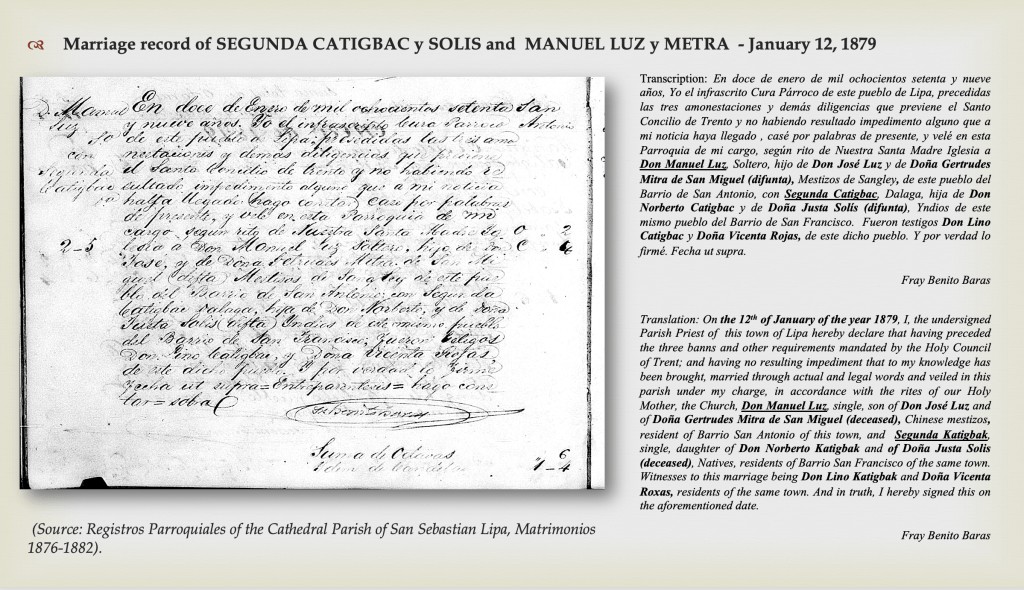
Segunda and Manuel were joined in Holy Matrimony on January 12, 1879. Their union produced 14 children but only 9 survived to mature age namely, Cristeta (married to Guillermo Katigbak), Manuel Jr. (a bachelor), Flora (married to Edilberto Mendoza), Justa (married to Isabelo Katigbak), Arsenio (1m. Amparo Katigbak, 2m. Carmen Albert), Maria Paz (married to Pablo Dimayuga), Valeriano (married to Rosario Dimayuga), Julio (married to Carmen Genato), and Fernando (married to Luz Cabal).
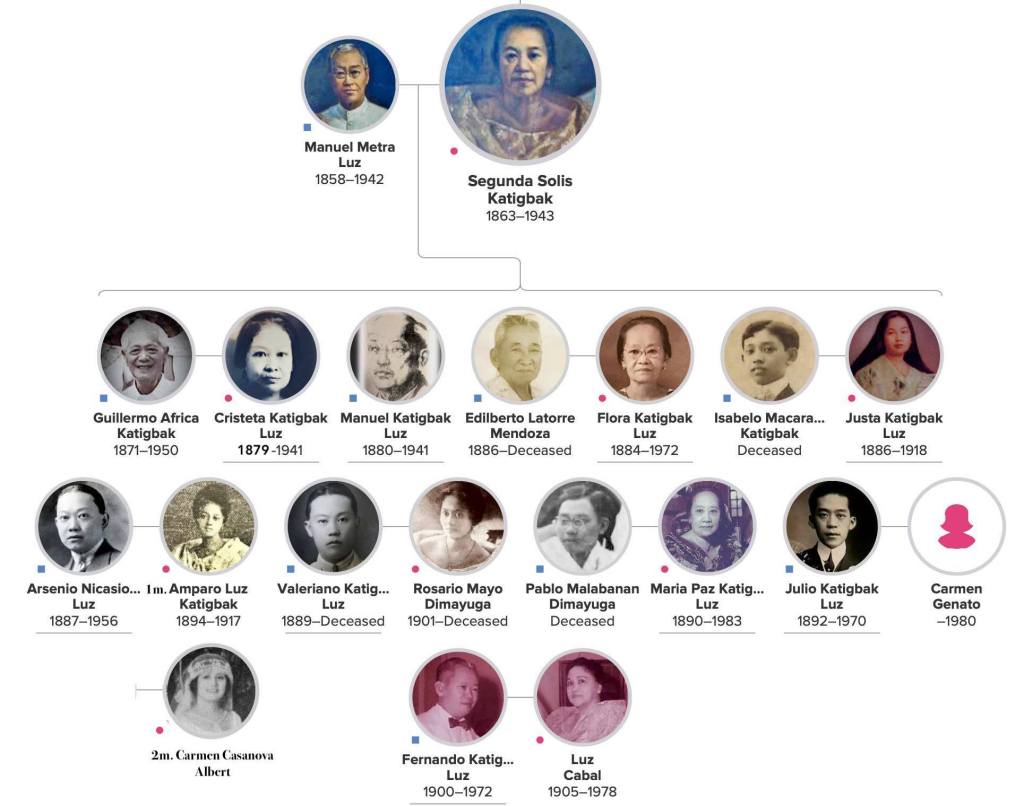
(by Renz Katigbak)
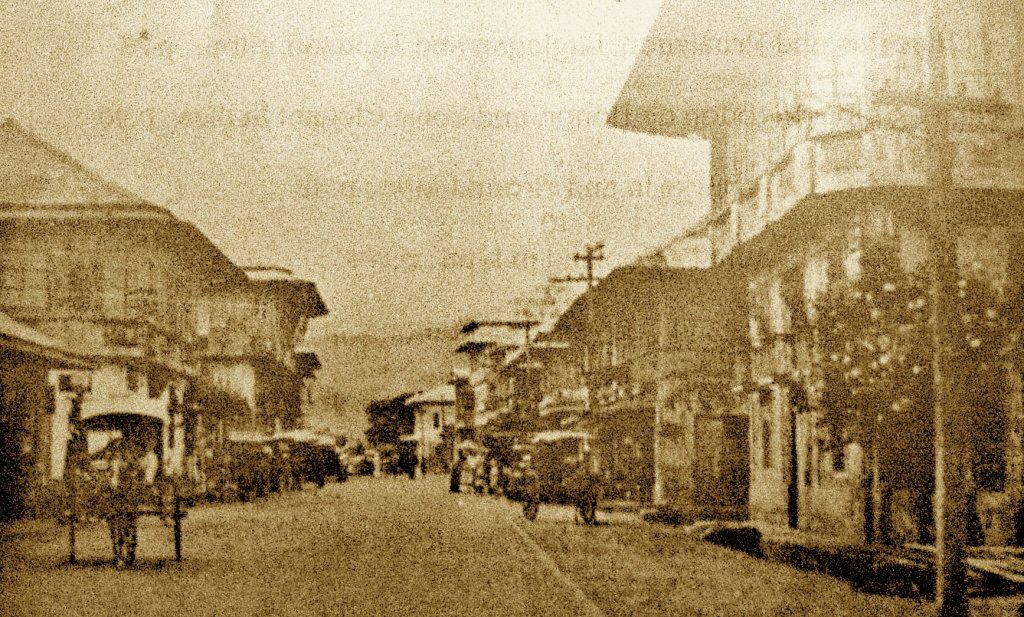
The Luz-Katigbak family originally resided in a house located at No. 42 Calle Real, the main thoroughfare of the town. This home was a grand bahay na bato with three stories and was considered one of the finest houses in the area. During the height of the 1898 Revolution, the Filipino revolutionary army occupied this house, using it as a strategic position from which to fire upon and attack the Spanish forces advancing toward Batangas, the provincial capital. The Luz-Katigbak family lived in this house until 1905, when they sold it for P7,000—a significant sum of money at the time—to Doña Germana Solis de Lozada, who was Segunda’s aunt.
The Luz family later moved to a new home, a 2-story bahay na bato on No. 31 Calle Rizal, previously owned by Manuel’s niece and Segunda’s sister-in-law, Maria Magcawas Luz Vda. de Katigbak. This house is now known as Casa de Segunda. Here, their children and grandchildren became inclined towards music and the arts. It was common for them to play several instruments and perform like a small orchestra after dinner. Don Manuel and Doña Segunda spent their last days in this home. Manuel lived up to 84 and passed away on June 27, 1942, while Segunda suffered from a heart attack and died on January 16, 1943.
The National Historical Commission declared Casa de Segunda a Heritage House in 1996 for being an excellent example of a well-preserved ancestral home, showcasing the genteel lifestyle of the past and harboring descendants gifted in business, the visual, and performing arts. Today, Casa de Segunda continues to be a well-loved attraction in Lipa, enchanting curious young minds with the allure and romance of a splendid bygone era.
__________________________________________________
Sources:
On Rizal and Segunda’s Love Story
Quotations in Spanish transcribed from Chapter 6 of Memorias de Un Estudiante de Manila: Autobiografía Escolar Inédita Del Dr. Jose Rizal Mercado, Durante El Período 1861-1881. Philippines, Impr. C.Hermanos, 1949.
Translations in brackets from Guerrero, Leon Maria. The First Filipino. Philippines, Guerrero Publishing, 2010.
On the Family History of the Katigbak, Solis, and Luz clans
Registros parroquiales, 1778-1958, Catedral de San Sebastián (Lipa City)
Contribución Industrial en Batangas ( 1894-1898), Filipinas Administración de la Hacienda Publica,
National Archives of the Philippines
Concesión de la cruz de la Real Orden de Isabel la Católica al comerciante D. Norberto Catigbac (1887), ULTRAMAR 5257, EXP.3, Sección de Reproducción de Documentos, Archivo Histórico Nacional, Madrid, España
Expediente renuncia que hace Don Norberto Catigbac del cargo de Vocal de la Junta de Agricultura, Industria, y Comercio de Batangas (1889), R.7o/785, National Archives of the Philippines
Relación de las instancias de composición de terrenos que existen en este tribunal municipal de Lipa con nombres de los interesados, fecha de la reclamación, y sitios en que están enclavadas los terrenos.
Composición de Terrenos, Batangas Book 4 Year: 1890-1897 Pages 2297-2298, National Archives of the Philippines
Feria Anual de Ganados en Lipa – Rodríguez Bérriz, Miguel. Diccionario de la administración de Filipinas. Philippines, Estab. tipo-lit. de M. Perez (hijo), 1887
Exposición Universal de 1867: catálogo general de la sección española. France, Imprenta general de Ch. Lahure, 1867.
Notarial records, 1907-1914, Lipa City (Batangas). Notary; Arguelles, Marciano
 Herencia Lipeña
Many thanks, Renz! Blessings in the new year to you and your family! Tita Stella
Sent from *Stella’s* iPhone
>
Thanks, Tita Stella for following the website. More to come.
The marriage record is very interesting. Are the barrios mentioned the same with the present-day baranggays (San Antonio, San Francisco)? Since you mentioned the grand homes of Calle Real, I remember at least in year 2005-2010 there is a three-story bahay na btot near Lipa Cathedral, was demolished and is now a motor-cycle shop.
That three-story house facing the Plaza was constructed after the war. Not a single home along CM Recto (formerly Calle Real/18 de Junio) survived the destruction brought by WWII. Regarding the information about the old names of the barrios in Lipa, I still have to research that.