
The Parish of San Sebastián de Lipa was administered by the Augustinians under the name Convento de San Sebastián en Comintang from April 30, 1605 until the close of the nineteenth century. The earliest churches of Lipa were built of light materials and were repeatedly destroyed, particularly by the eruptions of Taal Volcano. As a result, the early inhabitants of Lipa transferred their settlement several times before finally establishing themselves in a strategic location about twenty kilometers from the volcano.
Through the efforts of the Augustinian friars and the people of Lipa, the present church—described as possessing “serious architecture, proven solidity, and great proportions”—was substantially completed in 1790. Construction had begun during the terms of Fray Ignacio Vásquez Pallares (1779–1784) and Fray Alberto Tabares (1786–1788), and was continued under Fray Manuel Galiana (1788–1790).
The church was large and spacious, with whitewashed walls of cut stone and a tiled roof. Instead of a vaulted ceiling, it had artistically painted wooden paneling supported by heavy beams that crossed the interior walls. In 1803, Fray Juan Martínez de Zúñiga observed the transition of its architectural character from Baroque to Neoclassical. He noted that its altar ornaments were plain and simple, without the elaborate carved works that had characterized the preceding century. At the time, however, the bell tower remained unfinished, while the convento was still made

Parish Priest of Lipa (1862-1864)
Photo from the book La Ciudad de Dios,
University of Michigan Library Collection
In 1850, Maestro de Obras Pedro Lacsamana installed a decorative stone fence around the church patio and undertook repairs and whitewashing of the convento. Further improvements were made during the term of Fray Manuel Díez González, parish priest in 1863. As the population of Lipa continued to grow, the church could no longer accommodate the increasing number of parishioners. Fray Díez González therefore engaged the services of architect Luciano Oliver, who recommended extensive alterations: the construction of a spacious transept, the reinforcement of the nave and side walls with buttresses, and the strengthening of the bell tower.
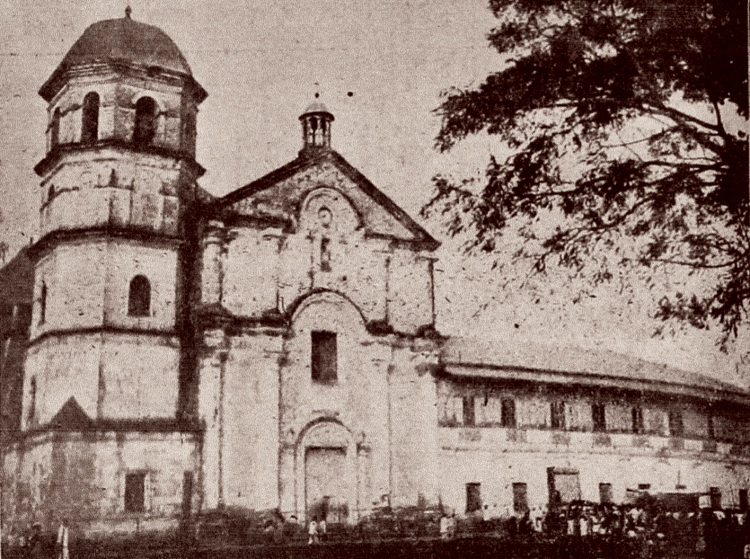
It originally had a five-story octagonal bell tower. Another story was added when the church was reconstructed in 1947.
Photo from the El Renacimiento Filipino Magazine (1911), Courtesy of the Antonio Vivencio del Rosario Heritage Library.
Fray Benito Baras, who succeeded Fray Díez González, served as parish priest of Lipa from 1865 until 1894. During his long administration, the church was fully completed and the convento was reconstructed according to plans prepared by the Spanish civil engineer Don José de Fuentes. Fray Baras also oversaw the construction of the Catholic Cemetery in Barrio Antipolo and the Sabang Bridge, which linked Lipa with Tanauan. The bridge was built without financial assistance from the state. Padre Baras served as cura of Lipa for twenty-nine years and died in 1894 at the age of sixty-nine.
“Courtesy of the Genealogy, History, and Archives Unit, Fort Worth Library.
[Sandra Plummer Collection, SPPC_020_040]”.

The First Secular Parish Priest of Lipa
Photo from the book
Estado general del Apostolado de la Oración en Filipinas.
Manila : Tip. de Santos y Bernal, 1911.
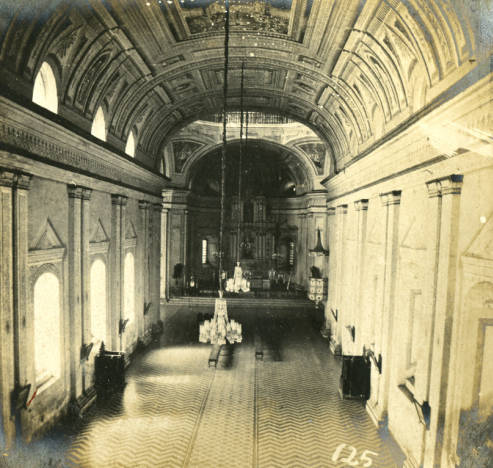
In 1903, Fr. Angel Ilagan, the first secular parish priest of Lipa, devoted much of his time to repairing the damage sustained by the church during the Siege of Lipa in 1898 and its occupation by American troops from 1900 to 1902. An inventory of church properties prepared in 1904 provides a valuable record of the cathedral’s appearance and furnishings before its destruction during the Second World War.
According to the inventory, the church had five altars:
- The altar mayor with an image of the patron San Sebastian mounted on top.
- The altar of the Nuestra Señora de la Consolación y Correa, patroness of the Augustinian Order, funded by the spouses Don Gregorio Aguilera and Doña Maria Solis
- The altar of Santo Niño funded by the spouses Don Norberto Catigbac and Doña Justa Solis
- The altar of San Nicolas funded by the spouses Don Cayetano Catigbac and Doña Ignacia Africa and by Don Toribio Catigbac and Doña Salvadora Solis
- The altar of San Agustín, patron of the Augustinian order, funded by the sisters Doña Manuela and Micaela Templo
The church was also furnished with eight crystal chandeliers donated by Don Gregorio Aguilera, Don Lino Catigbac, Don Celestino Luz, Don Sixto Roxas, and Don Gregorio Recede.
Among the religious images, ornaments, and furnishings listed in the inventory were:
- A two feet wooden image of the La Purísima Concepción housed in a silver urna and placed in the last tabernacle of the altar mayor (Its golden rostrillo and crown were donated by Don Fabio Trinidad in 1877.)
- Two images of San Sebastian tied in a tree
- Three images of Santo Cristo
- Fourteen frames of the Stations of the Cross
- Six confesionarios
- Two large silver plated frames of the Sacred Heart of Jesus and the Immaculate Heart of Mary, and
- Pilgrim images of an antique San Sebastian and Santo Niño for the barrios.
Excelsior: Decenario Ilustrado. Manila: [Imp. Santos y Bernal], 1918
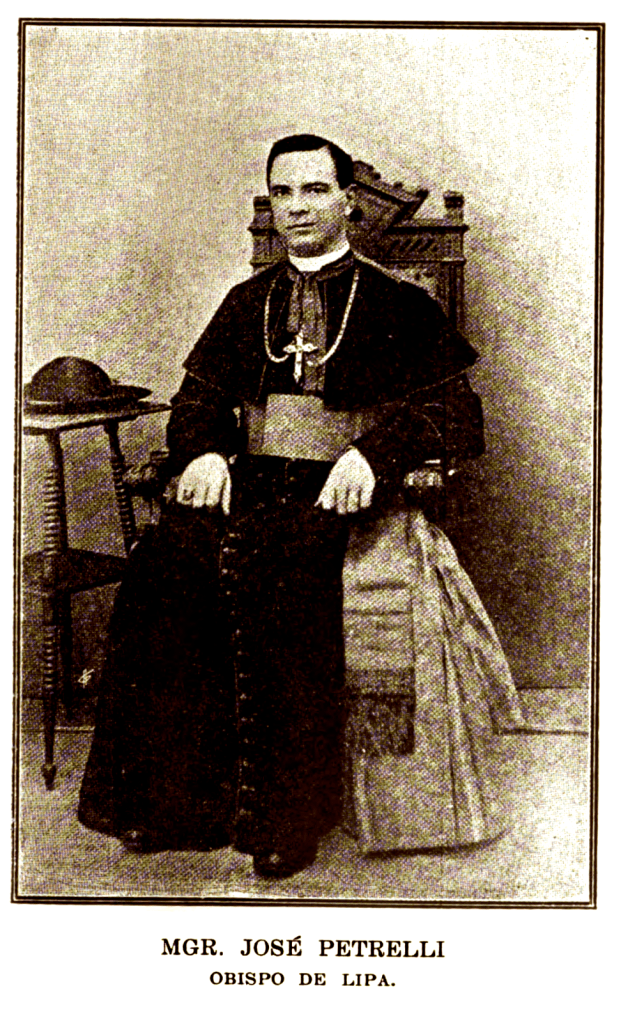
During the late nineteenth century, the towns of Batangas, Bauan, Lipa, Taal, and Tanauan competed to become the seat of a proposed diocese for Southern Tagalog. This rivalry encouraged the construction and expansion of large and imposing churches in the province. When the Diocese of Lipa was formally established on April 10, 1910, its first bishop, Most Rev. Giuseppe “José” Petrelli, D.D., selected Lipa as the episcopal see, reportedly because of its cooler climate. The Church of San Sebastián consequently became the cathedral of the new diocese, and its interior underwent partial renovation.
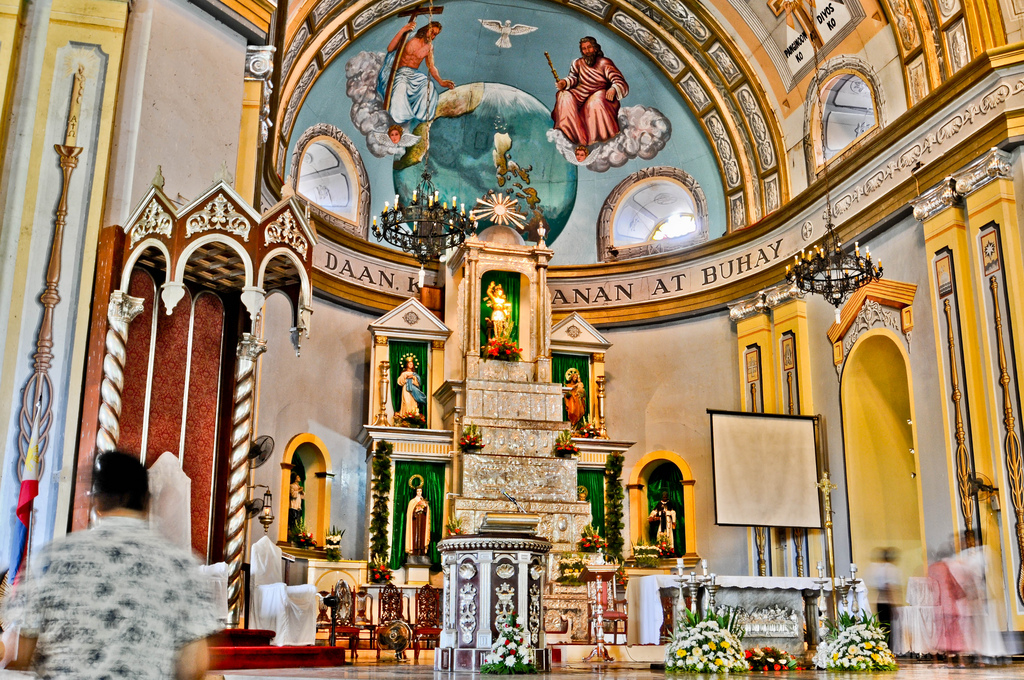
(Photo Courtesy of Mr. Alexis Paulino)
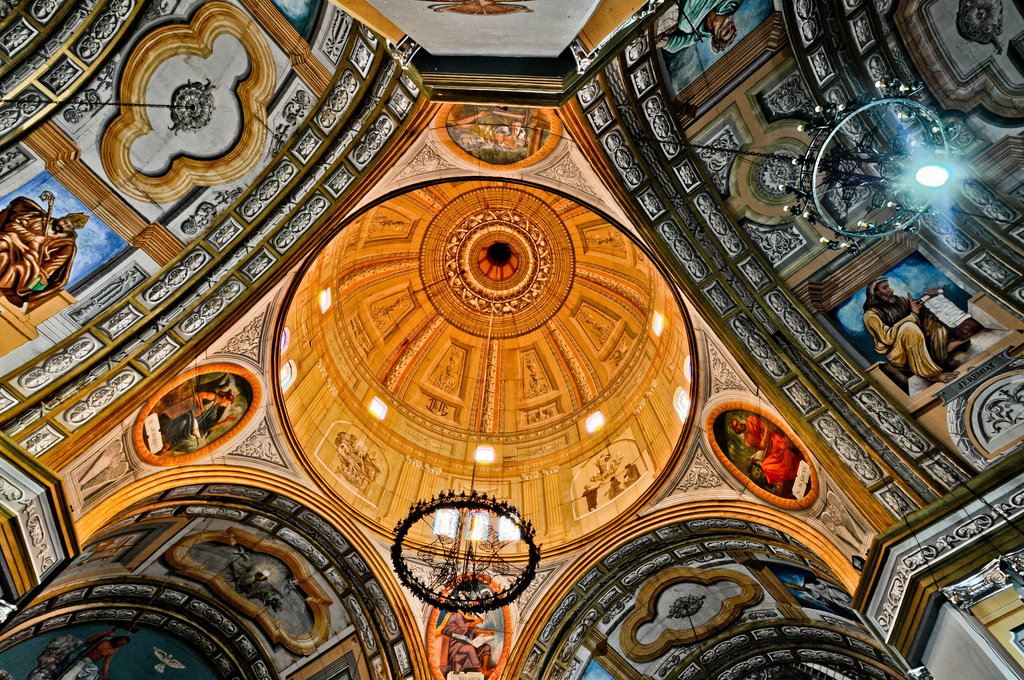
(Photo Courtesy of Mr. Alexis Paulino)
The cathedral suffered extensive damage during the Second World War. Its interior was destroyed, along with the second floor of the convento. Under Bishop Alejandro Olalia, restoration work was undertaken in the 1950s. The façade was reconstructed as closely as possible to its late nineteenth-century appearance, while the original five-story bell tower was extended by two additional levels and topped with a cupola. The eight-sided cupola over the crossing was replaced by a dome, the ceiling was repainted, and the side portions of the church were expanded.
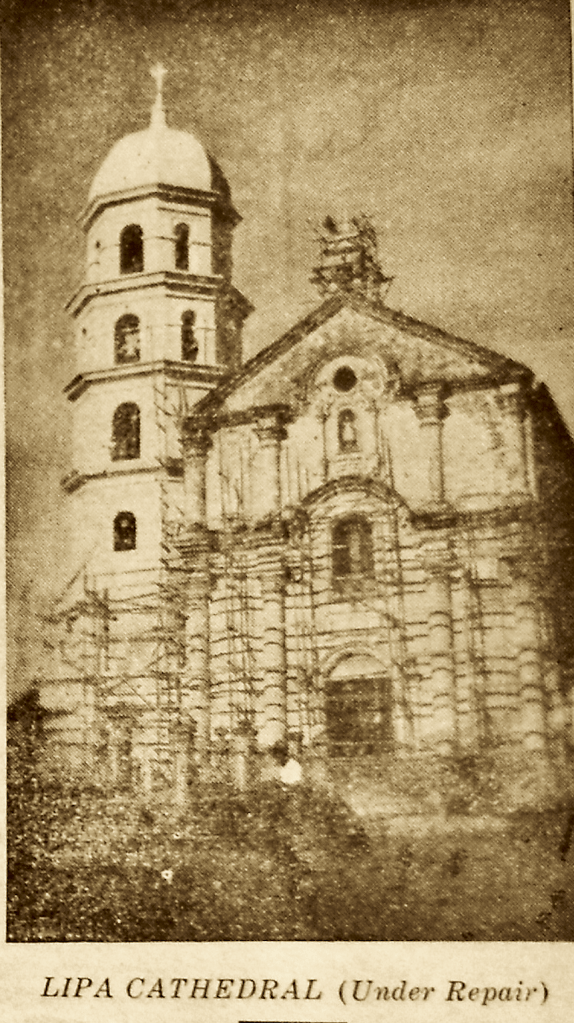
Souvenir Program of Lipa’s Inauguration as a Chartered City
August 31, 1947
(Photo Courtesy of Mr. Alexis Paulino)
Today, the San Sebastián Cathedral stands as a harmonious blend of sacred architecture, religious artistry, and practical function, serving not only as a place of worship but also as a repository of faith, history, and culture.
References:
Galende, Pedro G. Angels In Stone: Architecture of Augustinian Churches In the Philippines. Manila: G.A. Formoso Publishing, 1987.
Trota Jose, Regalado: Lumang Simbahan: Ancestral Churches in Batangas, Batangas: Forged in Fire. Philippines, Ayala Foundation, 2002.
Cathedral de San Sebastián – Inventarios 1904-1958; Cargo y data 1839-1931. Digitized by Familysearch.org


very to see them, we will for sure go and visit this cathedral when we go to lipa in june. thanks…
how can we get my son’s baptismal certificate, because he need this for his first communion this coming 4th of May, 2012… we’re here in abu dhabi, uae
Hi Sir you may request that from the Cathedral Parish Office. you’ll just pay 100 pesos for it.
sir diyan na ba nagkukumpil ngayon? kung magsadya ba ngayong araw halimbawa, makumpilan din the same day,at anu ano po ang mga requirements?
does the cathedral (san sebastian/lipa) issue certificate for baptismal conducted in sabang (sona) in 1974? pls help me where to get one; my mom says i was baptized at a chapel in sabang (sona) during the barrio fiesta; we left the place since i was 4 and never have gone back for more than 30 yrs now. i will greatly appreciate your response!
sino po parish priest ngayon ng lipa cathedral?
Msgr. Rafael Oriondo.
cno po ang pinaka unang parish priest ng lipa cathedral?
ang ganda =)
Would you be able to retrieve and issue latest Bapismal certificate of those born in 1939 and 1944 ?…..around the chaotic war years
What is your mass schedule on Thursdays? Thanks
sino po nag donate ng land para sa lipa cathedral?
Hi, do you accept group tours for student? I’m a travel agent/ tour operator and i’m looking for additional itinerary for my educational tour “Exploring Lipa, Batangas”. Appreciate if you can revert soon and if possible the requirement/ fee from our end.
Have a great day ahead!
Hi kindly get in touch with the Lipa Tourism Council office 043-784-2537.
tuwing kelan po sched ng kumpil at ano requirments?ty po
Confirmations usually happens during the town fiesta of Lipa every 20th of January .
The restoration looks nice but i grew up, even as a young child, marveling at the sepia color of the ceiling murals. For some reasons I prefer it than the colored versions. Maybe because the old feel, mastery of proper shadows done on the folds of their clothes are amazing, same with the clouds and the whole pictures. For me it was not restored rather a revamp to make it up to date. Historical values got lost along the way. But I commend the people who continually support to make the establishment last.