

In Philippine history, many patriots have been celebrated, but some remain unsung. Don Bernardo Solis is one such figure— a Filipino patriot whose dedication and contributions to the fight for freedom deserve remembrance and recognition.

Don Bernardo Solís y Metra was born in 1855 in Lipa, Batangas, the only son among the many daughters of Don Celestino Solís, a prominent coffee planter and four-term gobernadorcillo, and Doña Jacoba Metra de San Miguel, a lady of Chinese descent.
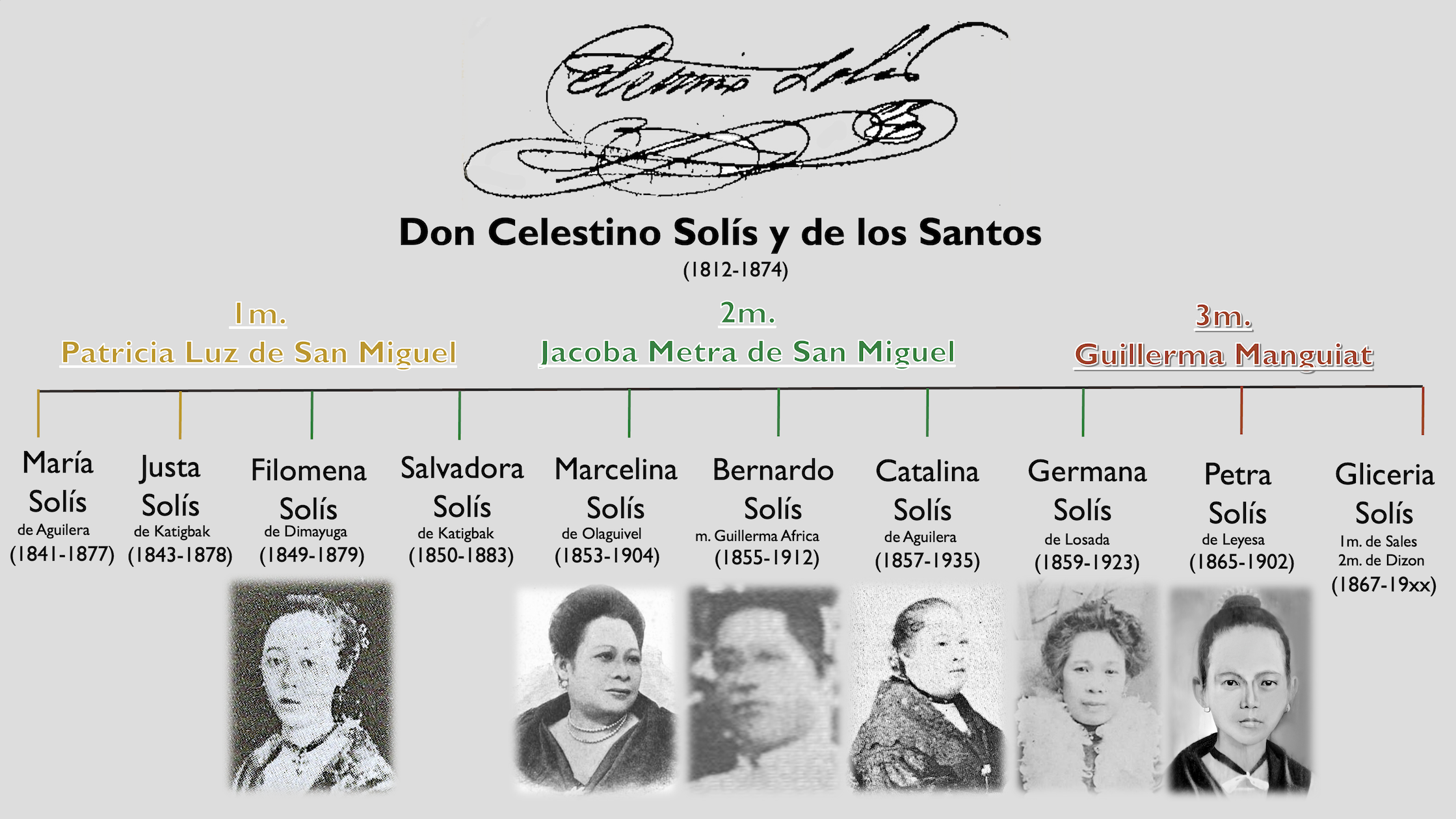
Compiled by Renz Katigbak
Following the tradition of wealthy Filipino families, his parents sent him to the Ateneo Municipal de Manila to study. A diligent and accomplished student, he achieved recognition in several subjects during the academic years 1866, 1867, and 1868: Geometry (worthy of praise), Business Mathematics (silver medal), French (worthy of praise), Good Conduct (first prize), Practical Piano Course by Le Carpentier (second prize), and Gymnastics (worthy of praise).1

After completing his studies, Don Bernardo was called to public service in Lipa. He was elected as the leader of his hometown in three political terms: as gobernadorcillo from 1881 to 1882, as capitán municipal from 1894 to 1895, and as presidente municipal during the First Philippine Republic from 1898 to 1899. From then on, he was fondly called Capitan Andong. His leadership was characterized by a careful balance of firmness and foresight during critical years in Philippine history. 2 One of the major challenges he faced came in 1882 when the Asiatic cholera outbreak claimed many lives in Batangas.3
Beyond his political activities, he was a successful entrepreneur. He founded La Vestal, a store that sold imported European goods and cigars from La Insular – Fabrica de Tabacos, Cigarillos y Picadura. To strengthen Lipa’s commercial standing in the region, he also engaged in the abaca trade, earning awards at the annual Batangas provincial and industrial fairs. Additionally, he was a dog and horse breeder and an equestrian who won in many racing events in the province.
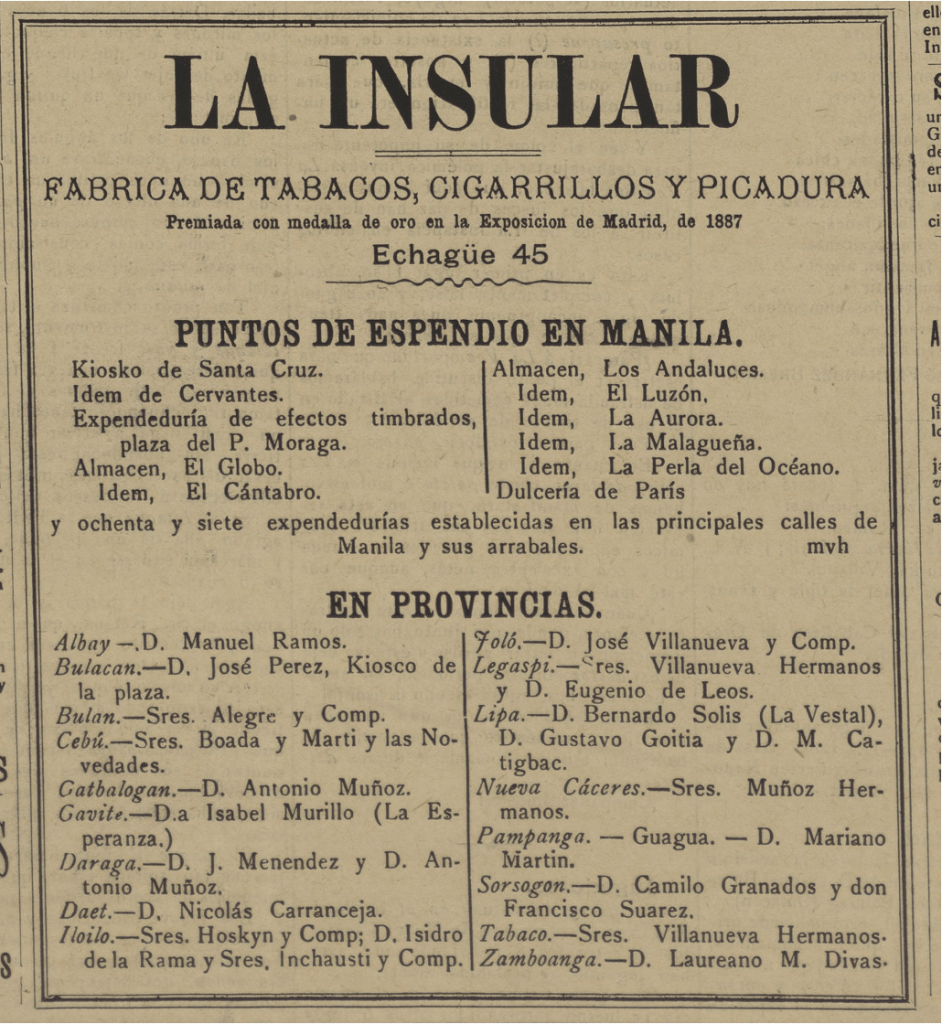
(El Comercio, 30 de mayo 1889)

(El Comercio, 25 de enero 1889)
During the Spanish colonial period, he actively supported the Propaganda Movement. Unknown to many, he was a close friend of the national hero Dr. José Rizal, with whom he maintained regular correspondence. Notably, he initiated a subscription campaign to fund the printing of Rizal’s work “El Filibusterismo,” contributing 800 pesos himself and raising 1,500 pesos from his friends. Despite the risks involved, he remained committed to the reformist cause. 4
When the Philippine Revolution of 1896-1897 broke out, Capitan Andong, through great tact and profound politics, saved Lipa from destruction and internal division. Despite being branded a filibustero (separatist), he prevented the Spanish authorities from razing the town’s important barrios suspected of supporting revolutionaries, including Payapa, Bugtong, Luta, and Mataas-na-Lupa, and saved many of his fellow liberals from execution.5
In the Siege of Lipa in June 1898, Capitán Andong led and personally funded a group of 80 armed men. As a volunteer in the military operations during the Siege of Santa Cruz (Laguna), he provided sustenance for 300 men whom he personally recruited. Recognizing his deeds, General Miguel Malvar appointed him as Chief of Staff of the Auxiliary Brigade, but he later stepped down from this position to return to civilian leadership upon his unanimous election as Presidente Municipal of Lipa. However, this did not stop him from supporting the struggle for independence. He managed to organize the delivery of 1,500 horses and 200 carts of rice to Filipino troops in Calamba. For his manifold contributions, President Emilio Aguinaldo bestowed on him the rank of Colonel of the Republican Army.6
Under Don Bernardo’s leadership as Presidente during the first Philippine Republic, Lipa maintained peace and order at a time when neighboring towns were in turmoil. He restored public street lighting, which had been suppressed due to the war, without incurring any cost to the residents or the municipal treasury. He also secured properties and livestock from outlaws and ensured the uninterrupted continuation of essential services in the town.7
Don Bernardo owned a residence in Lipa that was famous for its hospitality and history. Being one of the finest homes in the town, it hosted notable guests including Spanish governors-general, Philippine revolutionary officers, and American officials. Colonel Charles Judson Crane described it in detail, noting the presence of three pianos on each floor and a large mirror damaged by stray bullets during the siege of Lipa in June 1898, for this house was significant to the besiegers, as its location made it a stronghold for those fighting against the Spanish garrison stationed at the church. 8 During the American occupation, the building served as the Casa Presidencia (Municipal house), the seat of the local government of Lipa. Its spacious third floor became a venue for the town’s civic and social activities. Sadly, this house was destroyed during the Second World War.

A passionate writer, Don Bernardo demonstrated his literary skill, profound nationalism, and love for the vernacular language through contributing poetry and essays under the pen names BS METRA and Ermitaño to the Lipa revolutionary newspaper Columnas Volantes de la Federación Malaya.9 He also authored the zarzuela Simoy sa Kaparangan in 1903, a theatrical work notable for its revolutionary and patriotic theme.10
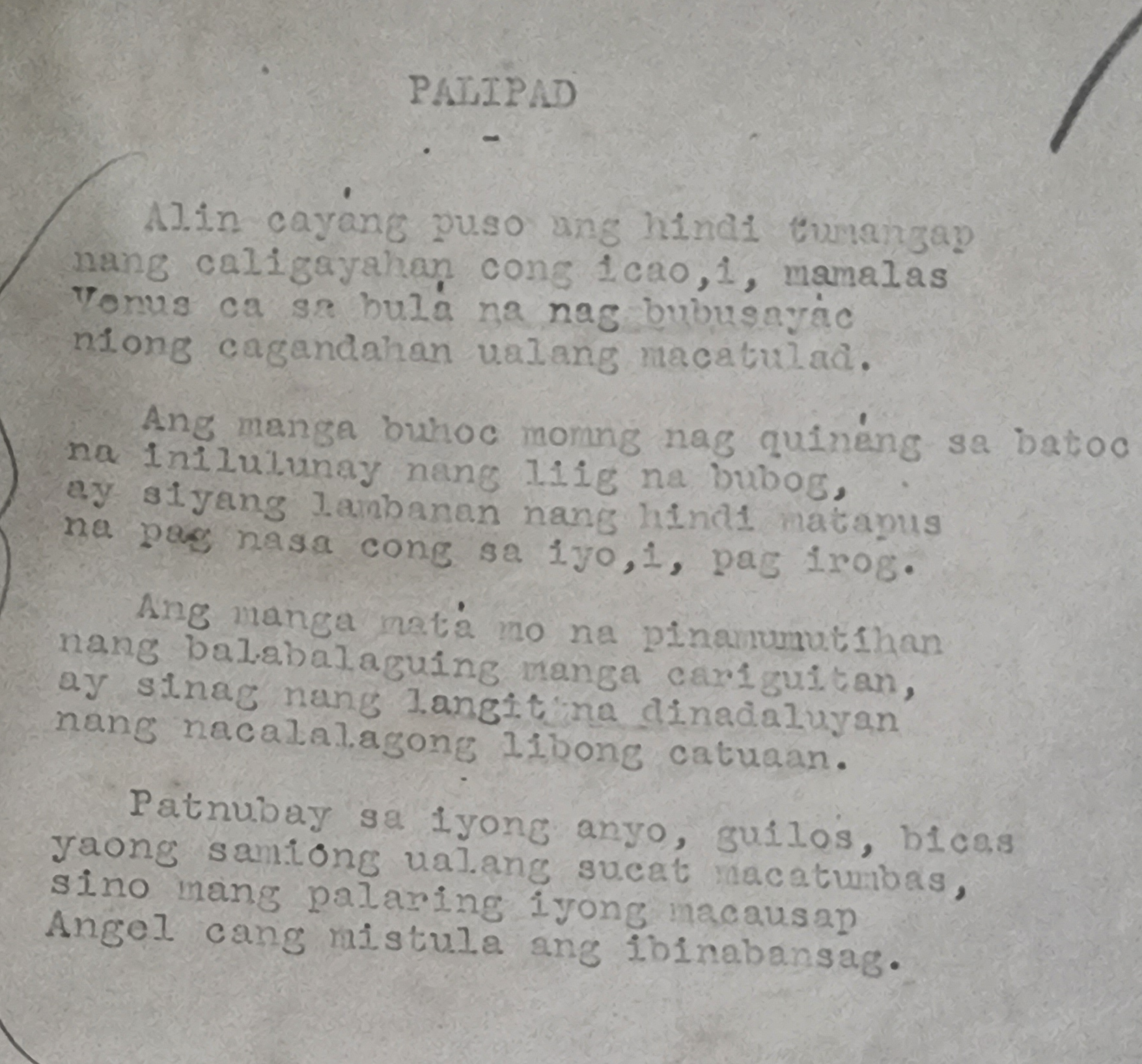
published in the Columnas Volantes de la Federación Malaya newspaper
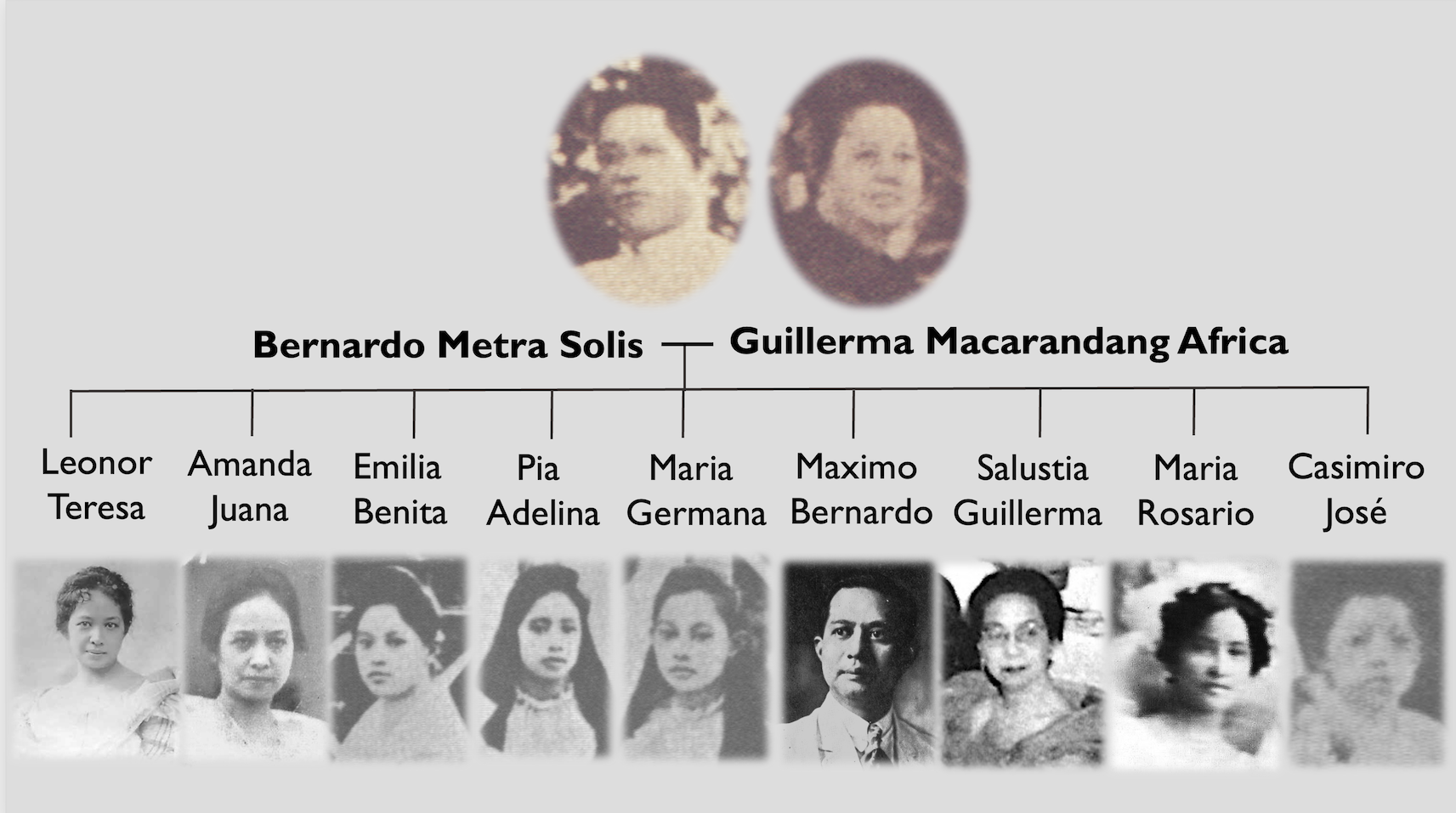
Don Bernardo married Doña Guillerma Africa in 1876. Like his father, he had more daughters than sons. His daughters—Leonor Teresa, Amanda, and Emilia—actively participated in the Red Cross Women’s Society of Lipa, where they provided care for sick and wounded Filipino soldiers during the Philippine-American War. His son, Maximo Bernardo, inherited his father’s literary inclination and became a writer and journalist, known in the Philippine literary world as “Max Bernard.”
Even in his later years, Capitán Andong continued to serve Lipa in various civic roles11. He passed away on February 7, 1912, after a battle with pulmonary tuberculosis. 12 He left behind a legacy that exemplified selfless service, motivated purely by the good of the nation rather than seeking gratitude.
_______________________________________
References:
- “Ateneo Municipal de Manila: Distribución de Premios a la Virtud y al Mérito.” Gaceta de Manila, 12 de mayo 1866. https://gpa.eastview.com/crl/sea/newspapers/gacm18660512-01.1.1.;
“Ateneo Municipal de Manila: Solemne distribución de premios merecidos por los alumnos en los exámenes del curso académico de 1867 a 1868.” Gaceta de Manila, 2 de abril 1868. https://gpa.eastview.com/crl/sea/newspapers/gacm18680402-01.1.5. ↩︎ - Manuel Artigas Cuerva. “Sa Kasaysayan ng ating mga Bayan. Mga NagKapitan sa Lipa (Batangan) Mula Noong 1702.” Patnubay ng̃ bayan: [Vol. 5, no. 47] (Maynila, K.P.: Imp. lit. y Fajardo, 1919) ↩︎
- Dr. José Losada who was the medico titular (provincial health officer) of Batangas during the 1882 cholera outbreak noted that, in the province, there were about 10,000 people afflicted and 4, 630 died. For further readings see, “Expediente promovido por el Doctor en Medicina y Cirugía Don José Losada y Aguilera para obtener la Cruz de Epidemias.” ES.28079.AHN/16//ULTRAMAR,5274,Exp.16, 1888. https://pares.mcu.es:443/ParesBusquedas20/catalogo/description/1700707 ↩︎
- Themis. “BUENOS SERVIDORES DE LA PATRIA.” Columnas Volantes de la Federación Malaya, 2 de julio 1899, Año I – No. 16. ↩︎
- Themis. “BUENOS SERVIDORES DE LA PATRIA.” ↩︎
- Ibid. ↩︎
- Ibid. ↩︎
- Charles Judson Crane. The Experiences of a Colonel of Infantry (New York: Knickerbocker Press, 1923.), 358 ↩︎
- Max Bernard Solis. Columnas Volantes de la Federación Malaya: Contribución [de Lipa] a la historia del periodismo filipino, Manila, 1928. ↩︎
- “Ang Simoy sa Kaparangan.” El renacimiento, March 13, 1903. https://gpa.eastview.com/crl/sea/newspapers/renx19030313-01.1.2. The author has a typewritten copy of the Zarzuela. Other works of Don Bernardo Solis include a Tagalog poem
“Pamutaui” and a romantic essay in Spanish entitled “Rosa del Mar. ” These were published in the newspaper Columnas Volantes de la Federación Malaya June 18, 1899 issue. ↩︎ - He was elected councilor of Lipa in 1906. “Sobre elecciones.” El renacimiento, January 5, 1906. https://gpa.eastview.com/crl/sea/newspapers/renc19060105-01.1.2. ↩︎
- Entry of burial, 8 de febrero 1912, Registros Parroquiales de Lipa. San Sebastian Cathedral Parochial Archives. ↩︎
 Herencia Lipeña