
The life of Don Lauro Solís Dimayuga unfolded during the most turbulent years of Spanish rule in the Philippines. He belonged to the ilustrado generation whose commitment to reform drew them into direct confrontation with colonial authority. Though once commemorated by a bust in Lipa’s Plaza Independencia and honored in 1991 with a historical marker unveiled by the National Historical Institute (now the National Historical Commission of the Philippines), his story still remains untold.

Born in Lipa in 1870 , Lauro was the only child of Don Catalino Dimayuga y Reyes and Doña Filomena Solís y Metra. From his father’s second marriage to Doña Romana Aguilera y Esguerra, he had two half-siblings, Rafael and Prudencia.
He completed his bachillerato with honors at the Colegio de San Juan de Letran. Recognizing his son’s potential, Don Catalino sent him to Spain for higher studies and entrusted his guidance to his friend, Dr. José Rizal. In a letter dated 8 October 1890, Don Catalino expressed both paternal pride and anxiety. He urged Lauro to prepare for a profession that would make him “a useful man in society,” whether in Madrid or elsewhere in Europe. He also voiced concern over an incipient scrofula noted by Rizal. He even authorized a change of climate if necessary, preferring that his son reside wherever Rizal could supervise both his studies and health. The same letter enclosed drafts representing contributions from Lipeños to support La Solidaridad, revealing that Batangas was not merely observing the Propaganda Movement from afar but actively sustaining it.

“In almost all my letters, as you know, I have tried to convince Lauro of the advantages of preparing for a career, whatever it might be, so that he would become a useful man in society. He can pursue it there in Madrid or else abroad. I am glad now of your good decision which coincides with my wishes, though I am disturbed and uneasy about the disease, incipient scrofula, which you have noticed in him, even if it is not serious… Pardon this egoism which is natural in a father like me whose son is far from home and is exposed to all kinds of risks. I have to seek support for him and no one else but you could do, because of your worth, disinterestedness, and thousand qualities that you possess, as well as my very special esteem for you which I am pleased to express now and always.”
Don Catalino Dimayuga to José Rizal
Letter of October 8, 1890, written in Lipa, Batangas
An English translation of the Original Spanish.
While in Europe, Lauro entered the Filipino reformist circle. He joined the Asociación Hispano-Filipina and supported petitions to the Spanish Overseas Ministry, including the 26 September 1890 protest denouncing the eviction of tenants in Calamba embroiled in rent disputes with the Dominican friars. He also became affiliated with Rizal’s select associations in Paris, notably the Kidlat Club and the Indios Bravos—groups intended to cultivate discipline, honor, and excellence to refute colonial stereotypes associated with the term “indio.”
At a gathering in Barcelona in June 1890, as published in La Solidaridad, Lauro took part in fencing matches alongside members of the Filipino colony, displaying skill in the Italian style. Such details illuminate the culture of the expatriate reformists: fencing, debate, and publication were all part of a deliberate effort to demonstrate refinement and equality before Europe.


Returning to the Philippines amid intensifying repression, Lauro continued to express reformist convictions. In 1892, during the wave of surveillance and arrests following Rizal’s return and exile, Governor Moriano of Batangas reported to Governor-General Despujol that several prominent Lipeños—most notably Dimayuga and his uncle Bernardo Solís—had been detained. Their arrests were part of a widening net known as the Expediente reservado (Confidential File), a secret surveillance operation designed to track and neutralize Rizal’s “adepts” or followers. Dimayuga was a natural target for the Spanish authorities. Having studied in Spain, he was a known reformist and a Mason with direct ties to Rizal. He and Solís were specifically linked to the Exposición dirigida á la Reina, a bold petition authored by Felipe Barrio that called on the Queen Regent of Spain, María Cristina, to expel the friars from the archipelago.
The pressure on Dimayuga only intensified as he moved abroad. By 1894, while he was in Hong Kong, defamatory pamphlets targeting Lipa’s parish priest, Fray Domingo de la Prieta, began circulating in his hometown. Convinced that Dimayuga was the author and was using local conduits to spread the propaganda, the priest prompted the Guardia Civil to act. On the night of September 20, 1894, authorities launched a series of midnight raids on the homes of three prominent locals: Gregorio Katigbak, Cipriano Kalaw, and Benito Reyes. The search yielded a trail of intellectual and personal connections: From Katigbak, they seized a letter from Dimayuga inquiring about the legal risks of returning home. From Kalaw, they confiscated copies of the banned pamphlets and books on canonical law. From Reyes, they took philosophical volumes by Jaime Balmes.
Though the materials ranged from personal inquiries to standard philosophy, the Manila fiscal moved quickly, citing criminal and procedural codes to refer the case to the Court of First Instance of Batangas. This crackdown highlighted a grim reality of the era: in the eyes of the colonial state, a private letter or a philosophical book was no longer just a personal possession—it was a confession of subversion.
In 1895, Fr. La Prieta, the Augustinian parish priest of Lipa, accused Lauro of sacrilege—alleging that he had taken communion without confession and passed the host to another. On this charge, he was imprisoned in the Batangas Provincial Jail. In a report dated 9 October 1895, Governor Leandro Villamil attributed to Lauro the authorship of a petition filed by prisoners complaining of abuses by the jail warden. The governor described him as overly conscious of his learning and resentful of stricter discipline, alleging that he influenced fellow inmates to submit groundless complaints. He dismissed the accusations against the warden as false and recommended Lauro’s transfer to Bilibid in Manila to preserve “the principle of authority.” This characterization confirms that colonial officials regarded him not merely as a detainee but as a destabilizing intellectual presence even within prison walls.

The Sentence of Don Lauro Dimayuga published on the 31st of December 1896 and inserted in the Gaceta de Manila of 13th February 1897.
Boletín jurídico-administrativo: apéndice al Diccionario de la administración española, peninsular y ultramarina
January 1, 1897
Administración: Arco de Santa María, 41 Triplicado
Yet imprisonment also marked a profound spiritual turning point. Lauro came under the pastoral care of Fr. Anastacio Cuento Cruz of Taal, later praised in El Católico Filipino as an exemplary priest devoted to the welfare of prisoners. Fr. Anastacio celebrated Mass, provided spiritual exercises within the jail, and sought especially to console Lauro in his suffering. During this period, he was portrayed as calm, reflective, and spiritually renewed.
On May 3, 1897, a violent uprising broke out in the Batangas provincial jail. Several prisoners killed the guards and escaped, but approximately ninety inmates refused to flee despite the opportunity to do so. Troops from a neighboring town arrived and, rather than distinguish between those who had participated in the revolt and those who had remained, ordered the prisoners assembled in the courtyard and fired upon them. Mariano Ponce later described the scene in a letter dated 31 August 1897: men pleading for mercy, cut down without trial. Lauro survived the initial massacre because he had prevented rebellious inmates from killing a guard during the riot.
His reprieve was short-lived. Within days, pressure from local friars ensured that he would not be spared. A sergeant informed him one morning that he was to be shot immediately. Lauro asked first to take breakfast, which he did with composure. He then walked to the courtyard and requested that the soldier fire upon his command. When he gave the word, the shot was discharged. There was no formal proceeding, no official record entered, and no sacramental rites administered. On May 4, 1897, at barely twenty-five years of age, Lauro Solís Dimayuga was executed inside the prison compound without the benefit of a trial.

Translation: On the 4th of May 1897. The remains of Lauro Dimayuga, native, married, and resident of Lipa, were buried at the cemetery of this Parish. He died at the age of 24 in the provincial jail on the aforementioned date due to the uprising that occurred in the same place on the 3rd of the same month. A free prayer service was given during his internment. And in truth, I hereby sign this.
Fray Bruno Laredo
He left behind a son, Carlos Juan Rafael Valentín Dimayuga, born in Sampaloc, Manila, in 1892 to his former wife, María Boria del Valle. Carlos later became a journalist and eventually settled in Vietnam, where he married Marie Jeromine Canavaggio of French-Vietnamese descent; their descendants now reside in France.
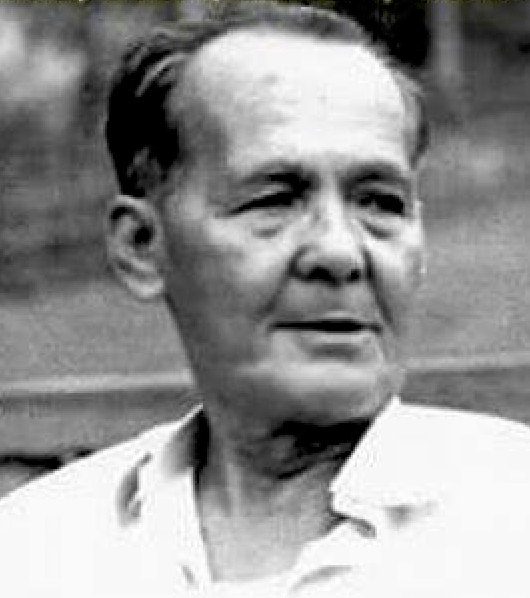
Although the bust and historical marker in Lipa, in his honor, have disappeared, a street still bears his name near the site of his ancestral home, preserving official recognition of his sacrifice.

 Herencia Lipeña
There must be somewhere the monument was transferred . Suggest we report to the the NHC the disappearance and what they can can suggest to the Lipeños. Was the mayor who was responsible for its transfer/ disappearance liable? What’s the penalty if any.
We Filipinos lack heroes, not because they weren’t born but because they were unknown, hidden,. Do our Batangueños students read Claro M. Recto? Do our Lipeños know Enrique Laygo?
Sadly, the present generation of students is unaware of their literary works. Their identities were only confined to names of streets and research among a few scholars.